
 Gift Certificate
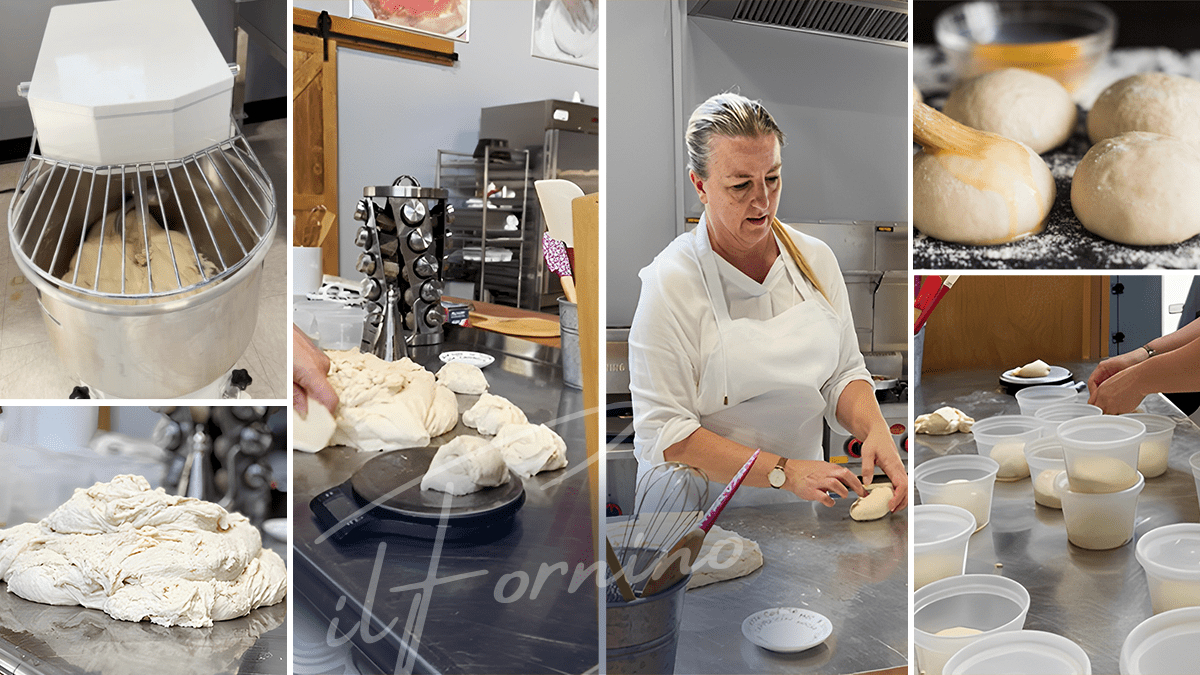

Level: Intermediate

Time: 3 hr 15 mins
Prep: 15 mins
Inactive: 2 hr 30 min

Yield: 3 pizza dough balls
Making pizza dough from scratch is simpler than it seems. With five basic ingredients, a little prep, and the right method, you can make homemade dough that’s soft, stretchy, and great for baking.
Whether you’re making a Margherita, a traditional Neapolitan-style pizza, or trying out your own toppings, good pizza always begins with good dough.
We will walk you through making pizza dough from scratch, covering ingredients, measurements, kneading, proofing, and baking tips for reliable results. You’ll also learn how to get your dough ready for baking in an ilFornino wood-fired pizza oven so that you can enjoy Italian flavors at home.
Ingredients:
The following ingredients make three approximately 13-ounce pizza dough balls.
| Ingredient | Quantity |
|---|---|
| All-purpose flour | 650 grams |
| Lukewarm water | 420 grams |
| Fine sea salt | 18 grams |
| Active dry yeast | 4 grams |
| Extra-virgin olive oil | 4 grams |
Tip: Use a digital kitchen scale for accurate measurements. Weighing your ingredients gives you more consistent results than using measuring cups.
How to Make Pizza Dough from Scratch: Step-by-Step Instructions
Step 1: Activate the Yeast
Add the lukewarm water (approximately 100–105°F) to a mixing bowl. Sprinkle in the active dry yeast and stir gently. Allow it to stand for 5–10 minutes until the yeast is dissolved and begins to foam.
Don’t use hot water because too much heat can harm the yeast.
Step 2: Combine the Ingredients
In a large mixing bowl, combine the flour and salt. Mix briefly to distribute the salt evenly.
Pour the activated yeast mixture into the flour, followed by the extra-virgin olive oil. Mix until everything comes together and no large pockets of dry flour remain.
Step 3: Knead the Dough
Transfer the dough to a lightly floured work surface. Knead by hand for approximately 8–10 minutes, or use a dough mixer with a dough hook for approximately 5–7 minutes.
The dough should feel smooth, elastic, and slightly sticky, but it shouldn’t stick too much to your hands.
Try not to add too much extra flour. Too much can make your crust dense and dry.
Step 4: Let the Dough Rise
Place the dough in a lightly oiled bowl and cover it with plastic wrap or a clean, damp kitchen towel.
Allow it to rise at room temperature (approximately 70–75°F) for 1½–2 hours, or until it has visibly increased in size by approximately 1½–2 times.
How long the dough rises depends on your room temperature and how active your yeast is.
Step 5: Divide and Shape the Dough Balls
Transfer the risen dough to a lightly floured work surface.
Divide it into three equal portions of approximately 368 grams each.
Gently shape each portion into a smooth ball by folding the edges underneath and rolling it against the work surface to create surface tension.
Put the dough balls in lightly oiled, covered containers. Make sure there’s enough space for them to grow.
Step 6: Final Proofing
Let the dough balls rest at room temperature for about 30–45 minutes before shaping.
The dough balls should feel soft, relaxed, and easy to stretch.
If you’re not using the dough right away, keep the covered dough balls in the fridge. For best results, use them within 24 to 48 hours. Take the dough out of the fridge 1 to 2 hours before baking so it can warm up and stretch more easily.
Step 7: Stretch and Shape Your Pizza
Lightly flour your work surface and place one dough ball on it.
Using your fingertips, gently press the center of the dough outward, leaving a slightly thicker border for the crust.
Continue stretching the dough with your hands until it reaches your desired pizza size, about 12–13 inches.
Don’t use a rolling pin because it can squeeze out the air bubbles that make your crust light and airy.
Your homemade pizza dough is now ready for sauce, cheese, and your favorite toppings.
Frequently Asked Questions
You need five basic ingredients: all-purpose flour, water, active dry yeast, sea salt, and extra-virgin olive oil. These ingredients combine to create a soft, elastic dough that’s easy to stretch and bake.
All-purpose flour works well for this recipe and is readily available. For a more traditional Italian-style pizza, you can also use Italian Tipo 00 flour, which is finely milled and commonly used for pizza making.
For this same-day recipe, let the dough rise for about 1½–2 hours during the first fermentation, then proof for 30–45 minutes after dividing it into individual dough balls. Rising times vary with room temperature.
Yes! Refrigerate the covered dough balls for 24–48 hours. A slower, cold fermentation can help develop additional flavor. Let the refrigerated dough warm up before stretching and baking.
Yes. Divide the dough into individual balls, lightly coat them with olive oil, and place them in airtight freezer-safe containers or bags. Freeze for up to approximately three months for best quality. Thaw overnight in the refrigerator, then let the dough come to room temperature before shaping.
For this particular dough, start with a cooking floor temperature of approximately 650–700°F. Actual baking temperature depends on your oven, crust thickness, and toppings. Always monitor the pizza and rotate it for even cooking.
Sticky dough can result from excessive water, insufficient gluten development, or warm dough. Knead it until smooth and elastic, and allow it to rest. If necessary, use a small amount of flour on your hands and work surface rather than adding large amounts directly to the dough.
The gluten may be too tight. Cover the dough and let it rest for 15–20 minutes before trying again. This allows the gluten to relax, making the dough easier to shape.
Need Help Calculating Your Pizza Dough Ingredients?
Want to customize your dough recipe? Try our Pizza Dough Calculator to calculate the exact quantities of flour, water, yeast, and salt based on the number and size of pizzas you're planning to make.